Nick Bosa Injury: What Happened, How Serious Is It, and What Does It Mean for His NFL Future?

The Nick Bosa injury has become one of the most discussed topics among NFL fans, analysts, and San Francisco 49ers supporters. As one of the league’s premier defensive players, any injury involving Bosa naturally attracts widespread attention. His ability to pressure quarterbacks, stop the run, and change the momentum of a game makes him an essential part of the 49ers’ defence.
Throughout his professional career, Nick Bosa has shown remarkable talent, determination, and resilience. However, like many elite athletes competing at the highest level, he has also faced significant physical setbacks. Understanding the nature of the Nick Bosa injury, how it happened, the recovery process, and its impact on both his career and the team’s success provides valuable insight into one of the NFL’s biggest defensive stars.
Nick Bosa Injury: Quick Overview
The most notable Nick Bosa injury occurred during the early stages of the 2020 NFL season when he suffered a devastating knee injury. Medical examinations later confirmed a torn anterior cruciate ligament (ACL), ending his season after only a few games.
Although this injury was a major setback, Bosa approached rehabilitation with professionalism and patience. Instead of rushing back to the field, he followed a carefully planned recovery programme designed to restore strength, mobility, and confidence in his knee. His disciplined approach eventually helped him return to elite form, proving why he remains one of football’s most respected defensive players.
Who Is Nick Bosa?
Nick Bosa entered the NFL with enormous expectations after an outstanding college career. Known for his explosive first step, powerful pass-rushing techniques, and exceptional football intelligence, he quickly established himself as one of the league’s best young defensive ends.
His impact extends far beyond collecting sacks. Bosa consistently forces quarterbacks into hurried decisions, disrupts offensive game plans, and creates opportunities for teammates. His presence alone changes how opposing offences prepare each week, making him one of the most valuable defensive players in professional football.
His combination of speed, technique, strength, and relentless effort has earned recognition from coaches, teammates, and football experts across the league. Even after experiencing major injuries, he has continued demonstrating why he belongs among the NFL’s elite defenders.
What Happened in the Nick Bosa Injury?
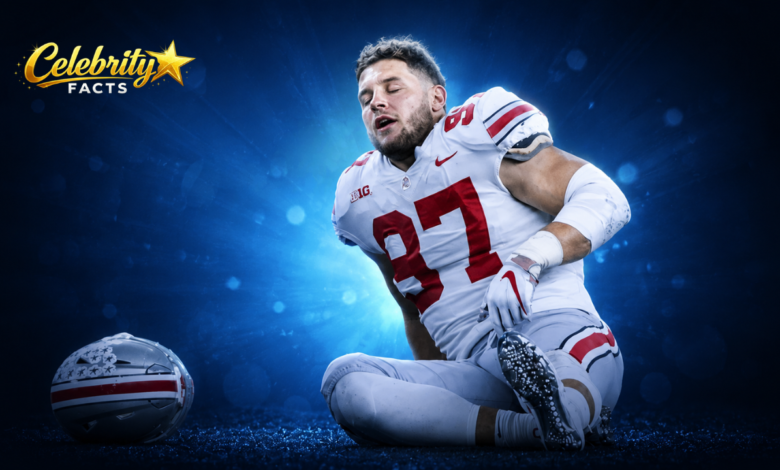
The Nick Bosa injury occurred during a regular-season game when his left knee twisted awkwardly while pursuing a play. Although the exact mechanics happened within seconds, the consequences proved severe.
Immediately after the play, Bosa remained on the ground in visible discomfort. Medical personnel rushed onto the field before assisting him to the sidelines for further evaluation. Fans and teammates quickly realised the injury appeared much more serious than a minor knock.
Subsequent medical imaging confirmed every player’s worst fear—a torn ACL requiring reconstructive surgery. Such injuries are among the most challenging for professional athletes because they demand extensive rehabilitation before returning to full competition.
The diagnosis ruled Bosa out for the remainder of the season, forcing both the player and the San Francisco 49ers to shift their focus from short-term competition to long-term recovery.
How Serious Was the Nick Bosa Injury?
A torn ACL is widely regarded as one of the most significant injuries in professional sports. The ligament plays a critical role in stabilising the knee during cutting, jumping, and sudden directional changes—all movements that define an elite pass rusher’s game.
For defensive ends like Nick Bosa, every snap requires explosive acceleration off the line of scrimmage. Any reduction in knee stability or confidence can affect speed, balance, leverage, and overall performance.
Fortunately, advances in sports medicine have dramatically improved recovery outcomes. Modern surgical procedures, combined with specialised rehabilitation programmes, have enabled many NFL players to successfully return from ACL injuries.
Even so, recovery involves months of strength training, flexibility exercises, balance work, football-specific drills, and gradual reintegration into competitive practice. Patience often becomes just as important as physical rehabilitation.
Quick Read Table
| Topic | Details |
| Player | Nick Bosa |
| Team | San Francisco 49ers |
| Position | Defensive End |
| Major Injury | Torn ACL |
| Injury Location | Left Knee |
| Surgery Required | Yes |
| Recovery Time | Approximately one NFL season |
| Return | Successfully returned to competitive football |
| Career Impact | Missed an entire season but returned to elite performance |
Nick Bosa’s Recovery Timeline
Recovering from a serious knee injury involves far more than simply waiting for the ligament to heal. Nick Bosa’s rehabilitation included multiple stages carefully monitored by doctors, physiotherapists, strength coaches, and team medical staff.
During the first phase, the emphasis focused on reducing swelling, restoring knee movement, and protecting the surgical repair. As healing progressed, rehabilitation shifted toward rebuilding muscle strength throughout the leg while improving flexibility and joint stability.
The next stage introduced football-specific movements. These included sprinting, lateral movement, pass-rushing drills, reaction exercises, and controlled contact sessions. Every milestone required careful evaluation before advancing to more demanding activities.
Perhaps the greatest challenge involved regaining confidence. Athletes recovering from ACL injuries often need time to trust the repaired knee fully during explosive movements. Bosa’s gradual return demonstrated both physical recovery and mental resilience.
His dedication throughout rehabilitation earned praise from coaches and medical professionals alike. Rather than rushing back before he was ready, Nick Bosa focused on long-term health, ultimately helping him regain his place among the NFL’s premier defenders.
How the Injury Affected the San Francisco 49ers
Losing a player of Nick Bosa’s calibre had an immediate impact on the San Francisco 49ers’ defensive performance. Defensive coordinators rely on elite edge rushers to pressure opposing quarterbacks without constantly sending additional blitzers.
Without Bosa on the field, opposing offences enjoyed more time in the pocket, allowing quarterbacks to make more comfortable throws and reducing overall defensive disruption.
His absence also affected teammates. Offensive lines no longer needed to devote extra attention to blocking Bosa, allowing them to allocate resources elsewhere. This change altered defensive schemes and reduced the number of one-on-one opportunities available for other pass rushers.
Beyond statistics, Bosa’s leadership, energy, and relentless playing style inspire those around him. Replacing his production is difficult, but replacing his influence is even harder.
Nick Bosa’s Performance After Returning
Many athletes struggle to regain their previous level following a major knee injury, but Nick Bosa’s return exceeded expectations.
After completing rehabilitation, he quickly demonstrated the same explosiveness, strength, and relentless effort that had made him one of football’s elite defenders before the injury. His pass-rushing ability remained highly effective, and he continued creating pressure on opposing quarterbacks throughout the season.
Football analysts praised not only his physical recovery but also his improved technical skills. By combining experience with refined technique, Bosa became an even more complete defensive player.
Nick Bosa Injury History
While the most widely discussed nick bosa injury is his ACL tear, it is not the only time he has dealt with physical setbacks. Like many elite NFL defensive players, his playing style—explosive bursts, high-impact collisions, and constant engagement with offensive linemen—naturally puts stress on his body.
Early in his career, Bosa also experienced minor muscle strains and upper-body soreness, which are common among defensive linemen who play at maximum intensity every snap. However, these were not long-term issues and did not significantly affect his availability over multiple seasons.
What stands out in his injury history is not the number of injuries, but rather how he responds to them. Nick Bosa has consistently shown a disciplined approach to recovery, focusing on long-term performance rather than rushing returns. This mindset has helped him maintain his position as one of the league’s most dominant defensive ends.
What Makes Nick Bosa So Important to the 49ers?
The nick bosa injury conversations often highlight one key reality—his value to the San Francisco 49ers is enormous.
Bosa is not just another defensive player; he is the centerpiece of the 49ers’ pass rush strategy. His ability to win one-on-one battles forces opposing teams to adjust their entire offensive game plan.
Key reasons he is crucial:
- Elite pass rushing ability that creates consistent quarterback pressure
- Game-changing explosiveness off the line of scrimmage
- Run defence strength, setting the edge effectively
- Leadership presence on and off the field
- Attention magnet, freeing teammates for easier matchups
Without him, the defensive line loses both production and intimidation factor. His presence alone reduces the effectiveness of opposing offensive schemes.
Can Nick Bosa Return to His Peak After Injury?
One of the biggest questions surrounding the nick bosa injury is whether he can fully return to his peak form after a serious knee injury.
The answer, based on modern sports recovery trends, is encouraging.
Athletes returning from ACL injuries in today’s NFL often regain close to or even exceed their previous performance levels due to:
- Advanced surgical techniques
- High-level physiotherapy programmes
- Position-specific training methods
- Data-driven workload management
In Bosa’s case, his return showed no significant drop in explosiveness or strength. In fact, many analysts believe his technical refinement improved during rehabilitation, making him even more efficient as a pass rusher.
As long as he maintains conditioning and avoids reinjury, there is strong reason to believe he can remain an elite defensive force for years.
Nick Bosa Injury Impact on Career and Legacy
Injuries are often turning points in NFL careers, but Nick Bosa’s case is different because he has already proven his ability to return at a high level.
The nick bosa injury did temporarily interrupt his momentum, but it also highlighted important aspects of his career:
- His resilience under pressure
- His commitment to long-term recovery
- His ability to return to elite performance
- His importance to the 49ers’ championship ambitions
Rather than diminishing his legacy, the injury added another chapter to it. Overcoming a major ACL injury is often seen as a defining test in an athlete’s career, and Bosa passed that test successfully.
Future Outlook for Nick Bosa
Looking ahead, Nick Bosa remains one of the most important defensive players in the NFL. As long as he stays healthy, he is expected to continue producing elite-level performances.
Key expectations for his future include:
- Continued leadership of the 49ers’ defensive line
- High sack production and quarterback pressures
- Strong influence in playoff and championship runs
- Maintenance of elite physical conditioning
However, managing workload and injury prevention will remain essential. The team is likely to continue carefully monitoring his snaps to reduce long-term injury risk.
If properly managed, Nick Bosa can remain a dominant defensive force well into the next phase of his career.
Conclusion
The story of the nick bosa injury is ultimately one of resilience, recovery, and elite athletic performance. While his ACL tear was a serious setback, it did not define his career. Instead, it highlighted his discipline, mental strength, and ability to return to one of the highest levels in professional football.
Nick Bosa remains a cornerstone of the San Francisco 49ers’ defence and continues to be one of the most impactful defensive players in the NFL. His journey shows that even major injuries can be overcome with proper recovery, patience, and determination.
FAQs
What is the main Nick Bosa injury?
Nick Bosa suffered a torn ACL in his knee, which required surgery and a long recovery process.
Is Nick Bosa fully recovered now?
Yes, he has successfully returned to professional football and resumed high-level performance after rehabilitation.
How long was Nick Bosa out with his injury?
He missed a significant portion of the season, as ACL recovery typically requires many months of rehabilitation.
Has Nick Bosa had multiple injuries?
He has had minor injuries throughout his career, but the ACL tear is the most serious and well-known.
Does Nick Bosa still play at an elite level after injury?
Yes, he returned strongly and continues to be one of the NFL’s top defensive players.
Could Nick Bosa get injured again?
Like all NFL players, there is always a risk of injury, but training and conditioning help reduce that risk.
Updated Report: July 2026
celebrityfacts.co.uk