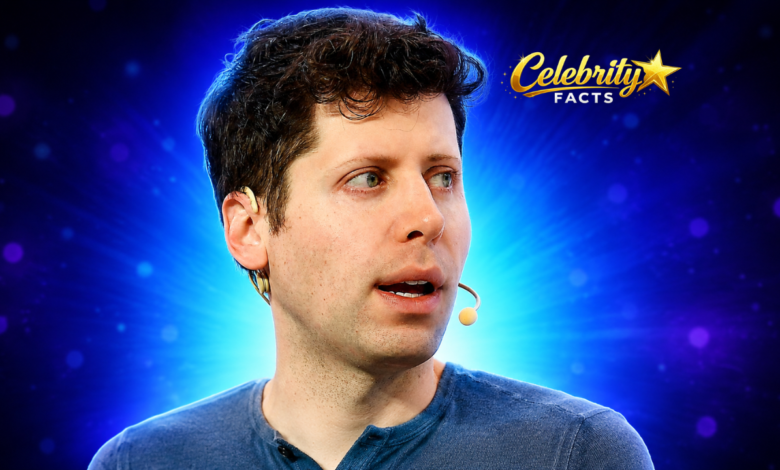
If you have searched Who is Sam Altman, the clearest answer is this: Sam Altman is an American entrepreneur, investor, and technology executive best known as the co-founder and CEO of OpenAI, the company behind ChatGPT.
He became one of the most recognisable names in technology after artificial intelligence moved from a specialist field into everyday public conversation. When millions of people began using ChatGPT to write, learn, brainstorm, code, and search for answers, attention naturally turned toward the people leading the company behind it. Sam Altman quickly became the most visible face of that shift.
However, his story did not begin with OpenAI. Before becoming one of the world’s most influential AI leaders, Altman founded a startup, joined the Silicon Valley accelerator Y Combinator, advised entrepreneurs, backed ambitious new technologies, and built a reputation as someone who focused intensely on the future.
What makes Sam Altman especially important is not only that he runs a major AI company, but that he has become a central figure in the global discussion about how artificial intelligence should be developed, regulated, funded, and shared.
Sam Altman at a Glance
| Topic | Details |
| Full Name | Samuel Harris Altman |
| Born | April 22, 1985 |
| Best Known For | Co-founder and CEO of OpenAI |
| Major Public Association | ChatGPT and the rise of generative AI |
| First Major Startup | Loopt |
| Education | Studied computer science at Stanford University before leaving |
| Former Leadership Role | President of Y Combinator from 2014 to 2019 |
| OpenAI Role | Became CEO in 2019 |
| Public Reputation | AI executive, startup investor, future-focused technology leader |
| Key Debate Areas | AI safety, regulation, governance, innovation, concentration of power |
Why the Question Who is Sam Altman Became So Popular
The phrase Who is Sam Altman became much more widely searched after ChatGPT entered public life. Artificial intelligence had been discussed for years in research labs, investor circles, and technology journalism, but ChatGPT changed the scale of attention. Suddenly, ordinary users were interacting directly with a powerful AI system, often for the first time.
This created a natural curiosity about the company leading that change. People wanted to know who was behind OpenAI, who was speaking to governments about AI, and who was shaping the direction of systems that could influence education, work, media, and business. Sam Altman became the person most closely associated with those questions.
His public profile also grew because he speaks in unusually broad terms about the future. Rather than presenting AI as just another software product, Altman often discusses it as a technology that could reshape economies, scientific discovery, and everyday human capabilities. That vision has made him compelling to supporters and concerning to critics.
In simple terms, people ask Who is Sam Altman because he stands at the intersection of entrepreneurship, artificial intelligence, policy, and the future of society.
Early Life and Education
Sam Altman was born on April 22, 1985, in Chicago, Illinois, and grew up in the St. Louis area. From an early age, he showed a strong interest in technology and computers. That interest became foundational to his later career, because it gave him both a technical curiosity and a builder’s mindset.
He later attended Stanford University, where he studied computer science. Stanford has long been associated with ambitious technology founders, and Altman entered that environment during a period when internet startups were attracting intense attention. Instead of completing his degree, he left university to focus on building a company.
That decision placed him in a familiar tradition within Silicon Valley: the young founder who chooses direct experience over a conventional path. Yet Altman’s career was not built on leaving school alone. What mattered was what he did next. He moved quickly from student to founder, then from founder to startup mentor, and eventually to one of the most influential executives in modern technology.
His early life shows a pattern that continued throughout his career: curiosity, risk-taking, and a preference for working on ideas that could become much bigger over time.
From Loopt Founder to Y Combinator Leader
Loopt: Sam Altman’s first major startup
Sam Altman’s first widely known company was Loopt, a location-based social networking service that allowed users to share their whereabouts with friends. The concept arrived before smartphones and mobile sharing became as central to daily life as they are today, which made Loopt an early experiment in what would later become a major technology category.
Although Loopt did not become a dominant consumer platform, it gave Altman invaluable experience in fundraising, product development, competition, and the difficulty of building a company from scratch. The startup was eventually acquired, and that chapter helped establish his credibility in the technology world.
Founding Loopt mattered because it gave Altman direct experience with both ambition and limitation. He learned that a big idea is not enough on its own. Timing, user adoption, product clarity, and execution are equally important. Those lessons later shaped his thinking about startups and scaling frontier technology.
Y Combinator: Building judgment around founders
After Loopt, Altman became increasingly involved with Y Combinator, one of the most influential startup accelerators in Silicon Valley. He first joined as a partner and later became its president.
Y Combinator has backed many highly successful companies, and Altman’s years there gave him exposure to a wide range of founders, products, markets, and business models. Instead of building only one company, he was now evaluating and helping many companies. That role sharpened his judgment about what makes ideas durable, what makes teams effective, and how emerging technologies move from possibility to adoption.
His time at Y Combinator also strengthened his reputation as someone drawn to large, difficult problems. He developed an interest in so-called “hard technology” areas, where progress may take longer but the impact can be enormous. That mindset helps explain why he later devoted so much of his career to artificial intelligence.
The transition from Loopt to Y Combinator was crucial. It turned Sam Altman from a startup founder into a broader technology strategist.
Sam Altman and the Rise of OpenAI
Co-founding OpenAI
Sam Altman co-founded OpenAI in 2015 alongside a group of prominent technology and research figures. The organisation was created around a mission of advancing artificial intelligence in ways that benefit humanity.
At the time, advanced AI was already becoming a major strategic field. Leading technology companies were investing heavily in machine learning, and some experts worried that the power to build extremely capable systems might become concentrated in too few hands. OpenAI emerged partly from that concern.
Altman’s role in the project positioned him at the heart of one of the most important technology stories of the century. OpenAI was not just trying to improve existing software. It was pursuing the development of increasingly capable AI systems with potential implications for education, science, automation, research, and economic productivity.
Becoming CEO of OpenAI
Sam Altman became CEO of OpenAI in 2019. This placed him in charge during a period of rapid expansion, both in the company’s ambitions and in public awareness of artificial intelligence.
Under his leadership, OpenAI moved from being known primarily inside technology circles to becoming a household name. The organisation developed and released powerful AI systems, with ChatGPT becoming the breakthrough product that introduced generative AI to a mass audience.
Altman became the person governments, businesses, researchers, journalists, and the public often looked to when asking what AI could become next. He testified before lawmakers, appeared in major interviews, and became deeply associated with the question of how fast AI should move and how carefully it should be governed.
ChatGPT and global recognition
The launch of ChatGPT transformed Sam Altman’s public image. Before that, he was widely respected in startup and investment circles. After ChatGPT, he became globally recognisable.
It is important to be precise here: Sam Altman did not single-handedly create ChatGPT. ChatGPT was developed by teams at OpenAI. Altman’s significance lies in his role as the company’s CEO, public representative, strategic leader, and one of the people guiding OpenAI through its most visible period of growth.
The success of ChatGPT changed how ordinary users thought about AI. Instead of imagining it only as robotics or science fiction, millions experienced it through conversation. That made the leadership behind OpenAI much more visible than most technology executives ever become.
The reason Sam Altman is now so widely discussed is that he became the public face of AI’s rapid move into everyday life.
What Sam Altman Believes About AI
AI as a transformative technology
Sam Altman often presents artificial intelligence as a technology with the potential to create enormous benefits. He has spoken about AI helping people become more productive, advancing scientific discovery, supporting education, accelerating research, and giving individuals tools that were previously available only to large institutions.
This optimism is a major part of his public identity. He does not usually frame AI as a small improvement to existing software. Instead, he treats it as a foundational shift, comparable in importance to earlier general-purpose technologies that changed whole economies.
That belief explains why OpenAI has pursued increasingly capable systems rather than focusing only on narrow commercial products. It also helps explain why Altman has become influential far beyond the technology sector. Business leaders, policymakers, teachers, writers, coders, and researchers all want to understand what these systems might mean for their work.
Safety, regulation, and public impact
At the same time, Altman has acknowledged that powerful AI systems can create serious risks. Questions about misinformation, job disruption, concentration of power, misuse, and long-term safety appear regularly in the public conversation around his work.
He has argued that AI should not develop without oversight and that governments need to think carefully about rules for high-capability systems. This position has made him both a collaborator and a target in policy debates. Some critics believe regulation should move faster or be stronger. Others worry that regulation could strengthen the position of already powerful firms.
That tension is one reason interest in who is sam altman continues to grow. He is not just a CEO selling a product. He is part of an unfolding debate about how society should respond to a technology that may become deeply embedded in daily life.
Altman’s public role is defined by a difficult balancing act: pushing AI forward while also arguing that society must prepare for its risks.
The 2023 OpenAI Leadership Crisis
Removal and reinstatement
One of the most dramatic moments in Sam Altman’s career came in November 2023, when OpenAI announced that he would depart as CEO. The move shocked the technology industry and immediately triggered questions about the company’s internal governance, leadership, and future direction.
Within days, the situation changed sharply. OpenAI employees, investors, and major partners rallied around Altman, and he returned as CEO with a new board structure announced shortly afterwards.
The episode turned him into an even more prominent public figure. It also showed how closely his identity had become linked with OpenAI. For many observers, the company and Altman had become difficult to separate in the public imagination.
Why the episode mattered
The leadership crisis mattered for more than personal drama. It raised larger questions:
- Who should govern powerful AI organisations?
- How should boards supervise fast-moving technology companies?
- What happens when mission, commercial pressure, and leadership trust collide?
- Can the public understand how decisions are made inside companies shaping the future of AI?
These questions did not disappear after Altman returned. In fact, they became an ongoing part of the public conversation around OpenAI and its CEO.
The 2023 crisis changed Sam Altman’s image from a rising technology leader into a figure associated with one of the biggest governance debates in modern AI.
Why Sam Altman Still Attracts Debate in 2026
OpenAI governance and public scrutiny
By 2026, Sam Altman remained one of the most influential people in technology, but his leadership continued to attract close scrutiny. As OpenAI became more powerful and more central to the AI industry, questions about transparency, governance, investment conflicts, and long-term strategy became more intense.
This is not unusual for leaders of companies with major social influence. The larger the impact of a technology, the more the public asks about who controls it, what incentives shape it, and how decisions are made. Altman’s position at OpenAI puts him directly inside those questions.
Some supporters view him as a rare founder-executive capable of guiding extremely complex technology through rapid growth. Critics argue that AI development should not become concentrated around a small number of companies and personalities. Both perspectives help explain why his name remains so visible.
The Musk lawsuit and broader concerns
In May 2026, a jury rejected Elon Musk’s lawsuit against OpenAI and Sam Altman on timing grounds, removing a major legal threat for the company. At the same time, the trial kept attention on broader questions about OpenAI’s direction, internal trust, and the tension between mission-driven ideals and commercial expansion.
For readers asking who is sam altman, this matters because it shows that his significance is no longer limited to startup history or AI product launches. He is now part of high-stakes debates involving law, corporate governance, public trust, and the future structure of the AI economy.
Even when legal outcomes favour OpenAI, the arguments surrounding Altman reveal how important public confidence has become in the AI industry.
Investments, Influence, and the Bigger Tech Story
Sam Altman’s influence extends beyond OpenAI. He has long been involved in startup investing and has shown interest in ambitious technology fields that could shape the future over many years. This broader involvement reinforces his image as someone focused on long-term transformation rather than short-term trends.
His Y Combinator background also matters here. Years spent reviewing startups gave him a panoramic view of how industries emerge, scale, and compete. That experience likely shaped his thinking about AI not merely as a research area, but as a platform that could influence countless sectors at once.
What separates Altman from many executives is the range of conversations he occupies. He appears in discussions about:
- Artificial intelligence
- Startup ecosystems
- Future infrastructure
- Scientific progress
- Economic change
- Technology policy
- Public trust in innovation
This breadth is why his name appears in business coverage, technology analysis, public policy debates, and biographies alike.
Sam Altman is not famous only because of one product. He is famous because he has become one of the central organisers of the modern AI era.
Personal Life and Public Image
Sam Altman generally keeps his private life less central than his professional work. Public attention has touched on his marriage to engineer Oliver Mulherin, but his public identity remains overwhelmingly tied to OpenAI, startups, and the future of technology.
His communication style is often described as calm, direct, and future-oriented. Rather than relying on flashy branding, he tends to speak in terms of long-range goals, powerful systems, major trade-offs, and societal consequences. That style has helped him build credibility among people who value strategic thinking, though it has also made critics examine his claims carefully.
Public figures at Altman’s level are often interpreted through extremes. Supporters may see a visionary. Critics may see an overly powerful technology leader. A more useful view is to recognise that he is both a successful entrepreneur and a controversial figure in a field where the stakes are unusually high.
What Makes Sam Altman Different From a Typical Tech CEO
Many technology CEOs are associated with a specific product, company, or business model. Sam Altman is associated with something broader: a technological transition that could affect nearly every sector of society.
His career combines several identities at once:
- Founder
- Investor
- Startup mentor
- AI executive
- Public policy participant
- Long-term technology thinker
That combination gives him a different kind of visibility. When people ask who is sam altman, they are often asking more than “What is his job?” They are really asking, “Why does this person matter so much right now?”
The answer is that Altman sits close to several of the biggest questions of the current era:
- How far can AI capabilities advance?
- Who should control them?
- How should benefits be distributed?
- What risks deserve urgent attention?
- How should society adapt?
Because he leads a company directly involved in those questions, his decisions attract attention far beyond ordinary corporate news.
Sam Altman matters because the technology he helps lead may influence how people work, learn, create, communicate, and compete.
Conclusion
The continued search interest around Who is Sam Altman reflects more than curiosity about a technology executive. It reflects public interest in the people shaping artificial intelligence at a moment when AI is moving quickly into business, education, science, and daily life.
Sam Altman’s journey from an early startup founder to Y Combinator leader and then OpenAI CEO shows a career built around high-risk, high-impact ideas. His role in the rise of ChatGPT made him internationally known, while the 2023 leadership crisis and the debates that followed made him a symbol of larger questions about power, governance, and trust in the AI age.
Frequently Asked Questions
Who is Sam Altman?
Sam Altman is an American entrepreneur and technology executive best known as the co-founder and CEO of OpenAI, the company behind ChatGPT.
Why is Sam Altman famous?
He is famous for leading OpenAI during the global rise of generative AI and for becoming one of the most visible public voices in discussions about AI’s future.
Is Sam Altman the founder of ChatGPT?
No. ChatGPT was developed by OpenAI’s teams. Sam Altman is closely associated with it because he leads OpenAI as CEO and became the company’s most recognisable public figure.
What did Sam Altman do before OpenAI?
Before OpenAI, he founded the startup Loopt and later became president of Y Combinator, one of Silicon Valley’s best-known startup accelerators.
Why was Sam Altman removed from OpenAI in 2023?
OpenAI announced his departure in November 2023 amid board concerns about leadership communication. After intense internal and external pressure, he returned as CEO within days.
Is Sam Altman still CEO of OpenAI?
Yes. As of May 2026, Sam Altman remains the co-founder and CEO of OpenAI.
Updated Report: May 2026
Celebrityfacts.co.uk