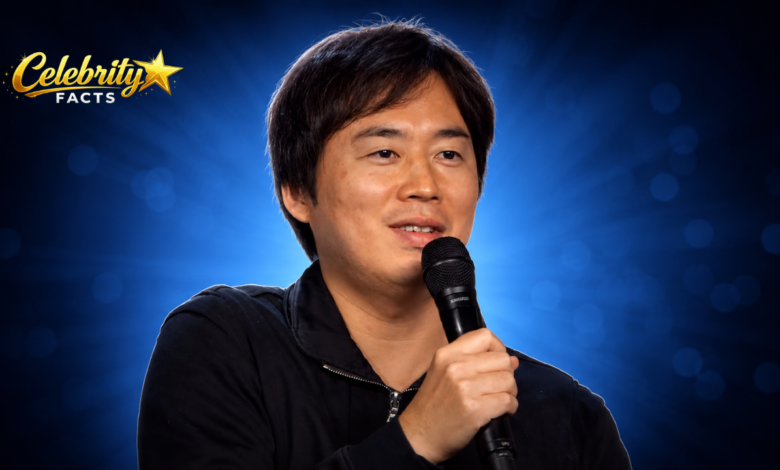
Masashi Kishimoto is a Japanese manga artist, writer, and creator best known for Naruto, one of the most influential shonen manga series of all time. He was born in Japan and developed an early love for drawing, manga, animation, and character-based storytelling. His journey was shaped by classic manga, Japanese culture, action cinema, friendship themes, and the emotional weight of growing up with ambition.
The name Masashi Kishimoto is strongly connected with Naruto because he wrote and illustrated the original manga from its beginning to its conclusion. The series introduced readers to Naruto Uzumaki, a mischievous young ninja who dreams of becoming Hokage, the leader of his village. Behind that simple dream is a deeper story about isolation, social rejection, inherited pain, and the need to be acknowledged.
Kishimoto’s work became popular because it balanced action with emotional clarity. Readers could enjoy the fights, transformations, rivalries, and ninja techniques, but they could also connect with the characters’ personal wounds. This combination helped Naruto stand out in a crowded manga landscape.
Quick Facts About Masashi Kishimoto
| Detail | Information |
| Full Name | Masashi Kishimoto |
| Profession | Manga artist, writer, illustrator |
| Best Known For | Creating Naruto |
| Main Genre | Shonen manga, action, adventure, fantasy |
| Famous Character | Naruto Uzumaki |
| Other Known Work | Samurai 8: The Tale of Hachimaru |
| Major Themes | Friendship, rivalry, loneliness, perseverance, forgiveness |
| Global Impact | One of the most recognized creators in anime and manga culture |
Quick summary: Masashi Kishimoto is the creator behind Naruto, a manga that became a worldwide anime and pop-culture phenomenon because of its emotional storytelling, memorable characters, and powerful themes.
Early Life and Creative Beginnings
Masashi Kishimoto’s path as a creator began with a childhood interest in drawing and storytelling. Like many artists, he was influenced by the entertainment he loved when he was young. Manga, anime, films, and Japanese visual culture all helped shape the way he imagined characters and dramatic scenes.
One of the most important things about Kishimoto’s early development is that he did not become successful overnight. Before Naruto became his defining work, he experimented with ideas, entered contests, studied art, and tried to find a style that could work for Weekly Shonen Jump readers. That stage matters because it shows how much trial and error exists behind a major manga success.
His early work Karakuri helped him gain attention as a promising new artist. This was an important step in his career because it showed that his talent had potential beyond casual drawing. Still, success in manga requires more than talent. It requires timing, discipline, character appeal, editorial guidance, and the ability to create a story that keeps readers returning week after week.
Masashi Kishimoto’s early career shows that even legendary creators usually pass through uncertainty before they find the idea that changes everything.
How Masashi Kishimoto Created Naruto
Naruto did not appear fully formed in the version fans know today. Masashi Kishimoto first explored the idea through an earlier one-shot concept before developing the final serialized version. Over time, the story shifted into a ninja-based world with villages, clans, missions, rivalries, exams, forbidden techniques, and emotional backstories.
The central idea was simple but powerful: a lonely boy with a dangerous force sealed inside him wants to become the respected leader of his village. That idea gave Kishimoto everything he needed for long-form storytelling. Naruto could grow in strength, build friendships, face rejection, learn discipline, and slowly prove that he deserved recognition.
Naruto’s world worked because it combined familiar shonen structure with specific emotional hooks. The Hidden Leaf Village felt like a home, a school, a military system, and a family-like community all at once. Team 7 gave the story a strong core: Naruto, Sasuke, Sakura, and Kakashi each represented different emotional conflicts.
Naruto wanted acceptance. Sasuke wanted revenge. Sakura wanted to grow beyond insecurity. Kakashi carried the sadness of past loss. Together, they gave the series its emotional engine.
The genius of Masashi Kishimoto’s Naruto is that the story begins with one lonely boy, then expands into a full world where almost every major character carries some form of pain.
Why Naruto Became a Global Phenomenon
Naruto became a global phenomenon because it was easy to understand emotionally, even for readers from different countries and cultures. The ninja setting felt Japanese, but the core emotions were universal. Many readers understood what it felt like to be ignored, underestimated, lonely, angry, jealous, or desperate to prove themselves.
Naruto’s dream of becoming Hokage was not only about power. It was about dignity. He wanted the village to stop seeing him as a problem and start seeing him as a person. That emotional goal gave his journey weight.
The series also grew at the right time. Manga and anime were becoming more visible internationally, and Naruto arrived with strong characters, memorable designs, exciting battles, and a long-running story that encouraged fan discussion. Fans debated favorite arcs, strongest characters, best fights, hidden symbolism, clan history, villains, and endings.
The anime adaptation helped Naruto reach even more people. Voice acting, music, openings, endings, fight choreography, and emotional scenes made the story accessible to audiences who had never read the manga. Naruto Shippuden expanded the world further and gave older fans a more intense version of the same emotional journey.
Masashi Kishimoto’s Art Style and Storytelling Strengths
Masashi Kishimoto’s art style is clean, expressive, and action-focused. His character designs are usually easy to recognize from silhouette, hairstyle, clothing, or facial markings. Naruto’s orange outfit, Sasuke’s calm expression, Kakashi’s mask, Gaara’s gourd, and Jiraiya’s wild hair all show how strong visual identity can help characters stay memorable.
Clear Character Design
Kishimoto understood that manga characters need to be visually distinct. A reader should be able to recognize a character quickly, even during a fast action scene. This is one reason Naruto characters became popular for fan art, cosplay, posters, games, and merchandise.
Emotional Facial Expressions
Another strength is emotional expression. Kishimoto often used close-ups, silence, tears, shock, anger, and exhaustion to make a scene feel personal. The emotional moments in Naruto are remembered because they are not only explained through dialogue; they are shown through faces, body language, and pacing.
Action With Strategy
Naruto battles are not only about who hits harder. Many fights include planning, deception, clone techniques, substitutions, chakra control, teamwork, or psychological pressure. This gives battles a puzzle-like quality. Readers do not simply ask who is stronger; they ask how someone can win.
Strong Rivalries
Masashi Kishimoto is especially known for building rivalries. Naruto and Sasuke are the clearest example. Their relationship is not a simple friendship or simple enemy dynamic. It moves through jealousy, admiration, anger, betrayal, obsession, pain, and eventual understanding. This complicated bond became one of the emotional pillars of the entire series.
Major Themes in Masashi Kishimoto’s Work
Masashi Kishimoto’s storytelling became powerful because it repeatedly returned to meaningful themes. These ideas made Naruto feel consistent even as the world grew larger and the battles became more intense.
Loneliness and Recognition
Naruto begins as a lonely child who wants people to notice him. This theme appears again and again through characters like Gaara, Sasuke, Nagato, Obito, and even some side characters. Kishimoto often shows that loneliness can turn people toward kindness or destruction depending on how they are treated.
Recognition is one of the strongest emotional themes in Masashi Kishimoto’s work. Characters do not only want victory; they want someone to understand their pain.
Friendship and Rivalry
Friendship in Naruto is rarely easy. It is tested through jealousy, betrayal, war, distance, and ideological conflict. Naruto and Sasuke’s rivalry shows how two people can be connected even when they walk opposite paths. Their bond is one of the main reasons the story stayed emotionally intense for so long.
Mentorship
Mentors are central to the Naruto world. Kakashi, Jiraiya, Iruka, Tsunade, Minato, Guy, and many others help younger characters grow. Kishimoto often presents mentorship as more than training. A mentor gives emotional guidance, belief, and sometimes sacrifice.
The Cycle of Hatred
One of the most mature themes in Naruto is the cycle of hatred. The story repeatedly asks why violence continues across generations. Clan conflict, war trauma, revenge, political fear, and personal loss all feed into larger systems of pain. Naruto’s role is not only to become strong but to challenge that cycle.
Perseverance
Naruto’s most famous emotional message is perseverance. The story values hard work, endurance, and the refusal to give up. This theme is especially clear in Naruto, Rock Lee, Hinata, Sakura, and many other characters who continue fighting despite weakness, fear, or rejection.
Masashi Kishimoto After Naruto
After Naruto ended, Masashi Kishimoto remained connected to the franchise through related projects, sequel material, films, and special stories. His post-Naruto period is important because fans often want to know whether he continued creating, retired, or stayed involved with the Naruto universe.
One notable post-Naruto project was Naruto: The Seventh Hokage and the Scarlet Spring, which helped bridge the original story and the next generation. He also worked on story material connected to Boruto: Naruto the Movie, which focused on Naruto’s son, Boruto Uzumaki.
Kishimoto later created Samurai 8: The Tale of Hachimaru with artist Akira Okubo. This series mixed samurai ideas with science-fiction concepts. Although it did not reach Naruto’s level of popularity, it showed that Kishimoto wanted to explore new worlds beyond the ninja setting.
Not every project after a huge success can become another global phenomenon, but Samurai 8 showed Masashi Kishimoto’s willingness to experiment with different themes and settings.
Boruto and Kishimoto’s Current Connection
Many fans search Masashi Kishimoto because they want to know his current role in Boruto. This topic can be confusing because his level of involvement has changed and has been discussed differently at different times.
Boruto began as a continuation of the Naruto world, focusing on the next generation. Mikio Ikemoto, who worked as an assistant during Naruto, became a major creative figure in Boruto. Over time, fans have debated how much of Boruto is Kishimoto’s direct work and how much belongs to Ikemoto and other creators.
The clearest way to understand the situation is this: Naruto is Masashi Kishimoto’s original manga, while Boruto is a continuation shaped heavily by Mikio Ikemoto and the next-generation creative direction. Kishimoto remains the original creator of the world, but Boruto has its own workflow and creative identity.
This matters because readers sometimes judge Boruto as if it were created in exactly the same way as Naruto. It is better to see it as a sequel built from Kishimoto’s original universe but developed through a different production approach.
Why Masashi Kishimoto Still Matters Today
Masashi Kishimoto still matters because Naruto continues to influence fans, creators, and anime culture. Even years after the original manga ended, Naruto remains active through streaming, manga reprints, games, merchandise, social media discussions, new fans, Boruto, and possible future adaptations.
His influence can be seen in how modern shonen stories handle emotional backstories, rival characters, mentor figures, training arcs, tragic villains, and long-term worldbuilding. Kishimoto helped popularize the idea that villains are not always evil for simple reasons. Many Naruto antagonists are shaped by grief, war, betrayal, or broken ideals.
This does not mean every part of Naruto is perfect. Some fans criticize certain pacing choices, power scaling, side-character usage, romance development, or late-story complexity. But those criticisms also prove how deeply people care about the story. A work that inspires debate for decades has clearly left a mark.
Masashi Kishimoto’s greatest achievement is creating a world that fans still want to discuss, defend, question, revisit, and share with new readers.
Masashi Kishimoto’s Influence on Manga and Anime Fans
For many fans, Naruto was an entry point into anime and manga. It introduced them to serialized storytelling, Japanese terms, ninja mythology, manga volumes, anime arcs, character rankings, fan theories, and online fandom. That cultural role makes Kishimoto’s work especially important.
Naruto also became a global language of motivation. Phrases like “never give up,” the idea of a personal “ninja way,” and the image of an underestimated hero pushing forward became part of fan identity. People connected Naruto’s journey to school struggles, family problems, loneliness, bullying, ambition, and personal growth.
Kishimoto’s characters also created strong emotional communities. Fans who loved Sasuke often discussed trauma and revenge. Fans who loved Rock Lee admired effort without natural gifts. Fans who loved Hinata connected with quiet courage. Fans who loved Kakashi understood grief hidden behind calm behavior. This variety made the world feel personal to different readers.
What Makes Masashi Kishimoto Different From Many Manga Creators?
Masashi Kishimoto stands out because of his ability to turn simple emotional ideas into long-running dramatic arcs. Naruto begins with a lonely child who wants respect, but that one idea grows into a story about war, inherited hatred, friendship, mentorship, political systems, family legacy, and forgiveness.
He also knows how to create iconic character relationships. Naruto and Sasuke, Kakashi and Team 7, Jiraiya and Naruto, Itachi and Sasuke, Guy and Lee, and Naruto and Iruka all show different forms of connection. Some are warm, some tragic, some complicated, but most are emotionally memorable.
Another difference is Kishimoto’s use of contrast. Naruto is loud while Sasuke is quiet. Lee relies on effort while Neji represents natural talent. Jiraiya is comedic but carries wisdom. Itachi seems cruel but hides sacrifice. These contrasts give characters more depth and help the story stay engaging.
Common Misunderstandings About Masashi Kishimoto
One common misunderstanding is that Masashi Kishimoto only created action scenes. In reality, Naruto’s staying power comes from emotional structure, not just fights. The battles are exciting because they usually carry personal meaning.
Another misunderstanding is that Boruto is exactly the same type of work as Naruto. While both exist in the same universe, the creative workflow and focus are different. Naruto is Kishimoto’s core original story. Boruto is a next-generation continuation with a different creative structure.
A third misunderstanding is that Kishimoto’s success was effortless. The manga industry is demanding, and weekly serialization is known for intense schedules. Naruto’s long run required discipline, consistency, and constant creative pressure.
Conclusion
Masashi Kishimoto is one of the most influential manga creators of the modern era because he gave the world Naruto, a story that blended ninja action with emotional depth. His greatest strength was not only drawing powerful battles or designing memorable characters. It was creating a world where pain, friendship, rivalry, ambition, and forgiveness all mattered.
Masashi Kishimoto’s legacy lives through Naruto because the story continues to speak to anyone who has ever felt ignored, underestimated, or determined to prove their worth. Naruto Uzumaki’s journey from lonely outcast to respected hero remains one of the most powerful character arcs in manga history.
Even as Boruto continues the universe in a new direction, Kishimoto’s original work remains the foundation. His influence can still be seen in anime discussions, fan communities, character analysis, and the emotional language of modern shonen storytelling.
Masashi Kishimoto matters because he created more than a manga. He created a world that helped people feel seen.
FAQs
1. Who is Masashi Kishimoto?
Masashi Kishimoto is a Japanese manga artist, writer, and illustrator best known as the creator of Naruto. His work helped shape modern shonen manga and became one of the most recognized anime and manga franchises in the world.
2. Is Masashi Kishimoto the creator of Naruto?
Yes, Masashi Kishimoto is the creator of Naruto. He wrote and illustrated the original Naruto manga, which introduced Naruto Uzumaki, Sasuke Uchiha, Sakura Haruno, Kakashi Hatake, and the Hidden Leaf Village.
3. What inspired Masashi Kishimoto to create Naruto?
Masashi Kishimoto was influenced by manga, anime, Japanese culture, action storytelling, and his interest in emotional character journeys. Naruto developed from earlier ideas and became a ninja story centered on loneliness, recognition, friendship, and perseverance.
4. Does Masashi Kishimoto still work on Boruto?
Masashi Kishimoto remains the original creator of the Naruto universe, but Boruto has a different creative workflow. Mikio Ikemoto is strongly associated with the current Boruto manga direction, while Kishimoto’s original world and characters remain the foundation.
5. What other manga did Masashi Kishimoto create?
Besides Naruto, Masashi Kishimoto is known for works such as Karakuri and Samurai 8: The Tale of Hachimaru. Samurai 8 was a science-fiction samurai manga created with artist Akira Okubo.
6. Why is Masashi Kishimoto so famous?
Masashi Kishimoto is famous because Naruto became a worldwide manga and anime phenomenon. His characters, emotional themes, action scenes, rivalries, and worldbuilding helped the series connect with millions of fans across different countries and generations.
Updated Report: June 2026
Celebrityfacts.co.uk